
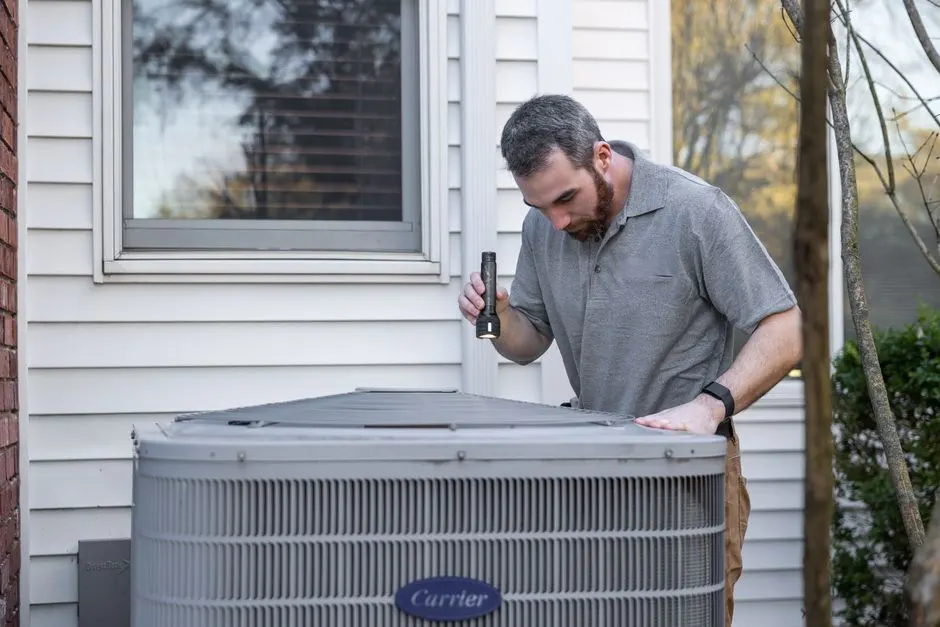
Full air handler teardown
We pull the blower panel, inspect the evaporator coil, drain pan, blower wheel and cabinet interior. Every surface gets photographed, and any suspect growth is documented with location and extent.
Every HVAC mold inspection includes the full visual survey, moisture readings, thermal imaging and two to three air samples. Lab fees for those samples are covered. Additional sampling, ERMI testing, mycotoxin panels and rush lab turnaround are add-ons, and we quote them upfront before we schedule.
We pull the blower panel, inspect the evaporator coil, drain pan, blower wheel and cabinet interior. Every surface gets photographed, and any suspect growth is documented with location and extent.
A boroscope lets us see inside the trunk lines and branch ducts without cutting into them. We inspect the first 10 to 15 feet of each main run, which is where most growth starts.
A Protimeter moisture meter and hygrometer log readings at the coil, plenum, drain pan and at each register. You get a humidity baseline you can compare against after any repairs.
A FLIR thermal imaging camera finds cold spots, duct leaks and condensation zones. We scan the plenum, coil cabinet and any duct chases running through hot attic or crawl space.
Two to three Air-O-Cell spore trap samples go to EMSL Analytical or LabCorp. You get species-level identification and indoor-versus-outdoor comparisons, not a color strip.
The final deliverable is a written report with photos, readings, thermal images, lab results and a remediation protocol referencing ANSI/IICRC S520 if growth is confirmed.
An HVAC Mold Inspection Fort Worth TX is a room-by-room and duct-by-duct evaluation of the equipment that moves air through your home. We open the air handler, pull the blower panel, inspect the evaporator coil, check the drain pan and condensate line, then run a boroscope through the trunk lines and branch ducts. A moisture meter and hygrometer tell us whether the system is staying wet, and a thermal imaging camera shows cold spots where condensation is forming. When we see suspect growth, we collect tape lift or swab samples and send them to EMSL Analytical or LabCorp for confirmation.
Fort Worth summers push AC systems to run 14 to 18 hours a day, and that constant cycling keeps coils wet and drain pans full. Add our spring pollen load, slab leaks in older Near Southside homes and roof leaks after hail, and you have the three conditions mold needs: moisture, organic dust and darkness. If you have been searching for an air duct mold assessment near me Fort Worth, we can usually get a tech out the same day. Call +1 (866) 896-8166 to book.
Every visit follows the same five steps, whether you have a 1,400 sq ft bungalow in Fairmount or a 6,000 sq ft commercial buildout in Eastchase. You get a clear scope, a fixed price and a report you can use.
Schedule
Call or book online — a real human picks up and confirms a 2-hour arrival window.
Diagnose
Licensed tech inspects on-site, then walks you through the cause and your options.
Fix
The job is completed to code and done right the first time — no shortcuts, no surprises.
Guarantee
Every job backed by a written workmanship warranty — and we stand behind it.
Boroscope
Lets us see 10 to 15 feet inside duct runs and plenums without cutting access holes. Photos document what we find.
FLIR thermal imaging camera
Finds cold spots, duct leaks and condensation zones invisible to the eye. Core tool on every inspection.
Protimeter moisture meter
Measures moisture content in duct insulation, plenum board and surrounding building materials at each suspect location.
Zefon air sampling pump
Draws a calibrated air volume through spore trap cassettes at the return and supply registers for lab analysis.
Air-O-Cell spore trap cassettes
Capture airborne spores for species-level identification at EMSL Analytical or LabCorp.
Mycometrics ERMI dust cloths
Collect settled dust for an ERMI score, giving a 0 to 20 index of the home's mold burden.
Hygrometer and particle counter
Log relative humidity and airborne particle counts room by room to establish a baseline before and after work.
ANSI/IICRC S520 assessment protocol
The industry standard for mold assessment and remediation. We follow it for inspection scope, sampling density and report format, which keeps our findings defensible with insurers and remediators.
Tape lift and swab sampling
When we see suspect growth, we lift a sample with tape or swab the surface and submit it for lab identification. This confirms species and distinguishes mold from dust, soot or staining.
Indoor-versus-outdoor air comparison
We sample outdoor air alongside indoor samples to establish a baseline. Elevated indoor counts of a species that is low outdoors is the clearest signal of an indoor amplification site.
Moisture mapping across the system
We log moisture readings at the coil, drain pan, plenum and each register, then map them onto a floor plan. The map shows where the system is staying wet and why.
Written remediation protocol
If growth is confirmed, we write a scope referencing ANSI/IICRC S520 that any licensed remediator can bid from. That keeps pricing competitive and scope consistent.
01
What we do: We run a full HVAC mold inspection, sample the return and two supply registers, and check the coil and drain pan. If growth is confirmed, we write a remediation protocol you can use to negotiate or to bid out repairs.
→ You get a clear answer within 48 hours and a documented scope you can hand to any contractor.
02
What we do: We inspect the coil for biofouling, check the drain pan and condensate line, and measure static pressure. Mold on a coil blocks airflow and forces the system to run longer.
→ You find out whether the coil needs cleaning and whether the moisture source is a simple drain fix or something bigger.
03
What we do: We inspect the unit's air handler and duct runs, document findings with photos and moisture readings, and provide a written report. If remediation is needed, we write the protocol so you can bid it out.
→ You have documented evidence, a clear scope and a paper trail for the tenant and your insurer.
04
What we do: We run a water damage assessment alongside the HVAC inspection, trace how far moisture traveled, and sample any suspect surfaces. The report ties the leak history to the current findings.
→ You know whether the leak is still feeding growth or whether the system just needs cleaning and drying.
Fort Worth sits in a climate zone where AC systems run hard for six months and then sit idle for two. That cycle is brutal on coils and drain pans. From May through September, indoor relative humidity in a typical home climbs past 55 percent, and the coil stays wet between cycles. Add our spring pollen load, which coats the coil and gives mold a food source, and you have ideal conditions for growth. Older neighborhoods like Ryan Place, Fairmount and Mistletoe Heights add another layer: pier-and-beam construction with crawl spaces that hold humidity, and slab leaks that can feed a plenum for weeks before anyone notices. Newer builds in Wedgwood and Eastchase have tighter envelopes, which means less natural ventilation and more reliance on the HVAC system to manage humidity. If you are looking for affordable air duct mold assessment Fort Worth TX, we scope the inspection to your system type and home age, so you are not paying for steps your house does not need.
Arlington Heights
Mix of 1940s bungalows and newer infill. Older duct systems here often have unsealed plenums that pull attic air into the supply.
Near Southside
Renovated older homes with original pier-and-beam floors. Slab and drain leaks are common and often feed the HVAC return.
Ridglea
Larger mid-century homes with multi-zone systems. We frequently find growth in the second-floor air handler closet.
Wedgwood
Tighter newer construction with less natural ventilation. Humidity control depends heavily on the AC running correctly.
Eastchase
Commercial and mixed-use buildouts with rooftop units. We handle multi-zone RTU inspections and document for property managers.
Six-month cooling season with high runtime
Coils and drain pans stay wet for months, which is the single biggest driver of HVAC mold growth in Fort Worth.
Spring pollen coating evaporator coils
Pollen gives mold a food source on the coil surface. Coils that are not cleaned each spring colonize faster.
Pier-and-beam crawl spaces holding humidity
Duct trunks running through crawl spaces pick up moisture and can grow mold on the exterior insulation jacket.
Attic temperatures above 140 degrees in summer
Duct runs in attics sweat when they cycle, and condensation on the jacket feeds growth on the outside of the duct.
Most HVAC mold calls start with a smell, a symptom or a water event. Here are the three patterns we see most often in Fort Worth, and how we handle each one.
Problem
The smell usually means active growth on the coil or in the drain pan. Every time the blower runs, spores move into your living space, and allergy symptoms get worse.
Our Fix
We pull the blower panel, inspect the coil and pan with a boroscope, and swab any suspect growth. Lab results confirm species, and the report tells you exactly what needs cleaning and why the moisture source needs fixing first.
Problem
When indoor relative humidity stays above 60 percent, cold duct surfaces sweat. That condensation feeds new growth and can rot duct insulation from the inside out.
Our Fix
We log humidity room by room, scan for cold spots with thermal imaging, and check bath fans, kitchen exhaust and fresh-air intakes. You get a humidity control plan, including dehumidifier sizing and ventilation fixes.
Problem
A roof leak after hail or a slab leak under a pier-and-beam floor can wet the plenum or duct trunk. If it is not caught fast, mold colonizes in 24 to 48 hours.
Our Fix
We run a water damage assessment alongside the HVAC inspection, tracing how far moisture traveled and whether the duct system was affected. The report documents everything for your insurance adjuster.
Problem
If symptoms spike when the AC runs, the system is likely distributing spores. Standard allergy testing will not tell you that, because it does not measure your air.
Our Fix
We run air sampling at the return and supply registers, plus an optional ERMI dust cloth test, to measure what is actually circulating. You get numbers, not guesses, and a clear path forward.

A duct system is the hardest part of a house to see into. Our inspection opens it up, documents what is growing, and gives you a plan you can hand to a remediator, an HVAC contractor or your insurance adjuster.
Stop the musty AC smell
That wet-cardboard odor coming from your vents is usually mold on the evaporator coil or in the drain pan. We locate the source with a boroscope and swab sampling, so you are not guessing. Most homeowners get a confirmed answer within 24 hours of the visit.
Protect your family's air
Every time the blower kicks on, spores from a contaminated plenum get pushed into bedrooms and living rooms. Our air sampling pump and Air-O-Cell spore trap cassettes measure what is actually circulating at the register, giving you a before-and-after number you can compare.
Document it for insurance
If a roof leak or slab leak fed the growth, your carrier will want proof. We deliver a written report with moisture readings, thermal images, lab results and photo documentation formatted for adjusters. That report is the difference between a paid claim and a denied one.
Save the equipment, not just the air
Mold on a coil usually means the coil is staying wet, which means the system is losing capacity and running longer. Fixing the moisture source and cleaning the coil can restore 10 to 15 percent of your cooling efficiency and add years to the unit.
Real answers to the questions we hear most often from local homeowners and property managers.
A full-property mold inspection is the right next step if your HVAC findings suggest growth has spread to walls, ceilings or flooring. We map the whole house and tie the duct system back to the rest of the building envelope.
View Mold InspectionWhen you need species-level identification, our mold testing adds air, tape lift and swab samples submitted to EMSL Analytical or LabCorp. Results pair directly with your HVAC report.
View Mold TestingAir quality testing measures what you and your family are actually breathing. We run spore trap cassettes and particle counters at multiple registers to compare indoor counts against outdoor baseline.
View Air Quality TestingMoisture mapping with a Protimeter meter and thermal imaging pinpoints where water is feeding the growth. This is often the step that explains why the AC coil keeps staying wet.
View Moisture Mapping and DetectionA FLIR thermal imaging inspection finds cold spots, duct leaks and condensation zones that are invisible to the eye. It is a core part of every HVAC mold assessment we perform.
View Thermal Imaging InspectionIf growth is confirmed, we write a remediation protocol referencing ANSI/IICRC S520. Your chosen contractor bids from the same document, which keeps pricing honest and scope clear.
View Mold Remediation ProtocolCall (866) 896-8166 or email info@fortworthmoldtesting.com and we will get you on the schedule. We answer calls Monday through Friday from 8am to 6pm and run emergency response for water damage and post-storm inspections. Most standard inspections are booked within a day or two.
Phone
+18668968166Address
Fort Worth, Texas
Hours
Mon–Fri: 7AM – 7PM
Sat: 8AM – 4PM
Sun: Emergency Only
24/7 Emergency Available