
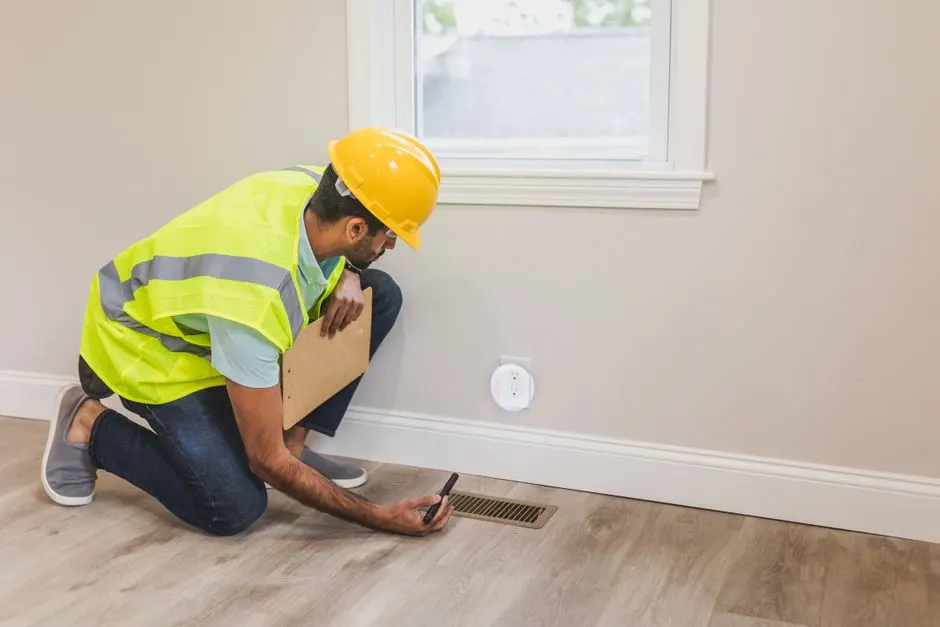
Full Visual Walkthrough
Room-by-room inspection of every accessible area, including attic, crawl space, basement, HVAC closet and under every sink. We photograph anything discolored, warped or soft, and we note the conditions feeding it.
Every inspection we run covers the full picture: visual, moisture, thermal and lab. Add-ons like ERMI testing or mycotoxin panels are available if you want them, but the core inspection stands on its own.
Room-by-room inspection of every accessible area, including attic, crawl space, basement, HVAC closet and under every sink. We photograph anything discolored, warped or soft, and we note the conditions feeding it.
We read every exterior wall, every wet-zone wall and every ceiling below a bathroom or roof with a Protimeter moisture meter. Readings are logged and mapped so you can see where the moisture is concentrated.
A FLIR thermal imaging camera reveals temperature differences that signal hidden water behind drywall, under flooring and above ceilings. It is how we find slab leaks and roof leaks before they become visible.
Air-O-Cell cassettes on a Zefon pump pull measured air samples from each suspect room plus one outdoor control. Tape lift and swab sampling capture visible growth for species-level identification at EMSL Analytical or LabCorp.
You get a written report with photos, moisture readings, lab data and a remediation scope built to ANSI/IICRC S520. We walk you through it by phone so you know exactly what to do next.
Mold Inspection Fort Worth TX is a non-invasive, room-by-room investigation that locates active mold growth, hidden moisture and the conditions feeding it. We start with a moisture meter and a Protimeter hygrometer on every exterior wall, then run a FLIR thermal imaging camera across ceilings and around windows to catch temperature swings that signal trapped water. A boroscope goes into wall cavities and HVAC plenums. Where we find growth, we pull tape lift sampling or swab sampling and send it to EMSL Analytical or LabCorp for species-level identification.
Fort Worth homes deal with a specific set of mold drivers: high humidity from May through September, slab leaks that soak carpet for weeks before anyone notices, and roof leaks that only show up after a spring hailstorm. We also see plenty of HVAC mold in older systems that have never had the drain pan cleaned. If you have been searching for a mold assessment near me Fort Worth TX 24/7 because water came through the ceiling last night, we can usually get eyes on it the same day.
Five steps, one visit, no surprises. Here is exactly what happens from the moment you call until the report hits your inbox.
Schedule
Call or book online — a real human picks up and confirms a 2-hour arrival window.
Diagnose
Licensed tech inspects on-site, then walks you through the cause and your options.
Fix
The job is completed to code and done right the first time — no shortcuts, no surprises.
Guarantee
Every job backed by a written workmanship warranty — and we stand behind it.
Protimeter Moisture Meter
Reads moisture content in drywall, wood and masonry. We use it on every exterior wall and any wall near a plumbing fixture or roof penetration.
FLIR Thermal Imaging Camera
Shows temperature differences that reveal hidden moisture behind surfaces. It is how we find slab leaks and roof leaks before they become visible stains.
Zefon Air Sampling Pump with Air-O-Cell Cassettes
Pulls measured air samples from each suspect room. The cassettes capture spores for lab analysis, and we always run one outdoor control for comparison.
Boroscope
A flexible camera that goes inside wall cavities, HVAC plenums and crawl spaces. It lets us see growth and moisture without cutting into finished surfaces.
Protimeter Hygrometer
Logs relative humidity and temperature in each room. High humidity is often the root cause behind condensation and surface mold on cool walls.
Mycometrics ERMI Dust Cloths
Collects a dust sample for ERMI analysis, which measures 36 mold species and produces a mold index score for the whole home.
ANSI/IICRC S520 Standard
The industry standard for mold remediation. Every protocol we write follows it, including containment, HEPA filtration, antimicrobial coatings and clearance criteria. That is what makes our reports defensible with insurers and attorneys.
Tape Lift and Swab Sampling
When we find visible growth, we take a tape lift or swab sample and send it to EMSL Analytical or LabCorp. The lab identifies the species, which tells you whether you are dealing with black mold, toxic mold or a common allergen.
Moisture Mapping
We log every moisture reading on a floor plan and mark wet zones. Your remediation crew can see exactly where to cut, where to dry and where to verify before closing up walls.
Outdoor Control Sampling
Every air quality test includes an outdoor control sample. Without it, indoor spore counts mean nothing. The comparison is what tells us whether your indoor air is actually elevated.
01
What we do: We run a full inspection during your option period, including air sampling and thermal imaging. The report is written to support repair requests or price negotiation, and we can usually deliver it within 48 hours.
→ You walk into closing knowing exactly what you are buying, or you walk away with documentation that supports your ask.
02
What we do: We check every wall, floor and cabinet the water could have reached, using moisture meters and thermal imaging. If readings are elevated, we sample for mold and tell you whether drying is enough or materials need to come out.
→ You either get confirmation that the space is dry, or you catch mold early before it spreads and costs more to fix.
03
What we do: We run air quality testing in every room plus an outdoor control sample, and we offer ERMI dust sampling or mycotoxin testing if you want a deeper look. The lab identifies species and concentration so you have real data.
→ You get a clear answer about what is in your air and a plan to fix it, instead of guessing and buying random purifiers.
04
What we do: We run post-remediation clearance testing: visual inspection plus air sampling to compare indoor spore counts against outdoor levels. If the job passed, we issue a clearance letter. If it did not, we document what was missed.
→ You have written proof the remediation worked, which matters if you ever sell the home or file another insurance claim.
Fort Worth sits in a climate zone that swings hard. Summers push indoor humidity past 60 percent for months, and spring storms dump enough rain to find every weak point in a roof. Older neighborhoods like Ryan Place and Fairmount have pier-and-beam foundations that let ground moisture rise into the subfloor, while slab-on-grade homes in Wedgwood and Eastchase hide leaks under carpet and tile. We adjust our inspection approach based on construction type and age. A 1920s bungalow gets a crawl space inspection and a close look at the pier supports. A 2015 build gets thermal imaging on every exterior wall because tight assemblies trap moisture instead of letting it dry. If you need a mold assessment near me Fort Worth TX 24/7 after a storm or a burst pipe, we prioritize emergency calls and can usually be on site the same day. Every inspection follows ANSI/IICRC S520, and every sample goes to an accredited lab.
Mistletoe Heights
Older pier-and-beam homes with mature trees. We see crawl space mold and roof leaks from overhanging branches, plus slab leaks in the additions many of these homes have.
Tanglewood
Mid-century homes with original HVAC systems. HVAC mold and attic mold from aging roof decks are the two most common findings here.
Downtown Fort Worth
High-rise condos and commercial buildings. We focus on HVAC systems, shared walls and condensation on cool interior surfaces during summer.
Eastchase
Newer construction with tight building envelopes. Moisture gets trapped instead of drying, so thermal imaging is essential to find it early.
Summer humidity above 60 percent indoors
Condensation forms on cool surfaces like AC registers and exterior wall interiors, feeding surface mold even without a leak. Dehumidification and ventilation fixes solve most of these cases.
Spring hail and wind-driven rain
Roof leaks that start in April often show up as attic mold by June. We inspect the attic decking and insulation after any major storm to catch it early.
Expansive clay soils
North Texas clay shifts with moisture, which stresses plumbing under slabs. Slab leaks are common, and they soak carpet and drywall for weeks before anyone notices.
Older pier-and-beam foundations
Ground moisture rises into the subfloor and framing. Crawl space mold is common in older neighborhoods, and vapor barriers plus cross-ventilation are usually the fix.
Most mold calls start with a smell, a stain or a health question. Here are the problems we see most often and how we handle them.
Problem
Hidden growth behind drywall or under flooring can spread through framing and insulation for months before it shows on the surface.
Our Fix
We run thermal imaging and moisture meters across every wall, then sample air in each room. If spores are elevated indoors compared to outside, we locate the source and map it for remediation.
Problem
Water that enters at the roof deck can soak insulation and ceiling drywall for weeks, feeding black mold in the attic before you notice a stain.
Our Fix
We inspect the attic decking, rafters and insulation, then check the ceiling below for moisture. If growth is present, we sample it and write a protocol your roofer and remediator can both work from.
Problem
Slab leaks in Fort Worth homes can run undetected for months, saturating carpet pad and wicking up drywall. By the time you see it, mold is usually already growing.
Our Fix
We use moisture meters and thermal imaging to trace the wet zone, then sample the baseboards and carpet edge. You get a clear picture of how far the moisture spread and what needs to come out.
Problem
Mold in an air handler or ductwork gets distributed to every room each time the system runs, which is why some families feel sick at home but fine elsewhere.
Our Fix
We inspect the air handler, drain pan, plenum and accessible ductwork. If growth is confirmed, we recommend cleaning or replacement and include the HVAC scope in your remediation protocol.

A mold problem you cannot see is still a mold problem. Here is what a proper inspection gives you that a $20 hardware store kit never will.
Lab-Confirmed Answers
We do not guess from a smell. Air-O-Cell spore trap cassettes and Zefon pumps pull measured air samples from each suspect room, and EMSL Analytical returns species-level results in 24 to 48 hours. You get a written report you can hand to a remediator, an insurance adjuster or a buyer.
Hidden Moisture Found
Roughly 70 percent of the mold we confirm in Fort Worth is behind drywall, under flooring or above ceiling tiles. Thermal imaging and a boroscope let us find it without tearing your house apart. We mark every wet zone on a moisture map so you know exactly where the problem starts.
Real Estate Deadlines Met
Option period closing in five days? We run mold assessment Fort Worth TX transactions on a rush schedule, with the report delivered inside 48 hours. Realtors across Tarrant County use us because we show up on time and write findings a buyer can actually understand.
A Fix, Not Just a Report
Every inspection ends with a written Mold Remediation Protocol: containment plan, HEPA filtration specs, antimicrobial coatings, and the ANSI/IICRC S520 standard the crew should follow. Your remediator bids the job off our scope instead of inventing one.
Google ★★★★★4.9
Called them after a roof leak and they were out the same afternoon. The inspector walked me through everything he found, showed me the thermal images, and had the lab report to me in two days. No pressure, no upsell, just straight answers.
Yelp ★★★★★4.8
We used them for a real estate inspection during a short option period. They turned it around in 48 hours and the report was detailed enough that the seller agreed to fix the issue. Worth every penny.
BBB ★★★★★4.9
Professional from the first phone call. They explained what the inspection would cover, gave me a flat price, and showed up on time. The remediation protocol they wrote saved us from a contractor who wanted to tear out way more than necessary.
Real answers to the questions we hear most often from local homeowners and property managers.
Once the inspection flags suspect areas, mold testing confirms species and concentration. We pull air and surface samples and send them to EMSL Analytical, so you know whether you are dealing with black mold, toxic mold or a common allergen.
View Mold TestingAir quality testing measures what you are breathing right now. We compare indoor spore counts against an outdoor control to prove whether your HVAC or crawl space is feeding spores into living areas. Results come back in 24 to 48 hours.
View Air Quality TestingMoisture mapping turns a vague musty smell into a precise map. We read every wall with a Protimeter meter and mark wet zones on a floor plan, so your remediation crew knows exactly where to cut and where to dry.
View Moisture Mapping and DetectionA FLIR thermal imaging camera shows temperature differences that reveal hidden water behind drywall, under flooring and above ceilings. It is the fastest way to find a slab leak or roof leak before mold spreads through the framing.
View Thermal Imaging InspectionOur written protocol spells out containment, HEPA filtration, antimicrobial coatings and clearance criteria per ANSI/IICRC S520. Your remediator bids from our scope, so you are comparing apples to apples instead of three wildly different estimates.
View Mold Remediation ProtocolAfter remediation, we return to verify the job actually worked. Clearance testing includes visual inspection plus air sampling to confirm spore counts are back to normal. You get a signed clearance letter for your records or your lender.
View Post-Remediation Clearance TestingCall (866) 896-8166 or email info@fortworthmoldtesting.com and we will get you on the schedule. We answer calls Monday through Friday from 8am to 6pm and run emergency response for water damage and post-storm inspections. Most standard inspections are booked within a day or two.
Phone
+18668968166Address
Fort Worth, Texas
Hours
Mon–Fri: 7AM – 7PM
Sat: 8AM – 4PM
Sun: Emergency Only
24/7 Emergency Available