Logo
Get Estimate

Residential Mold Inspection Fort Worth TX

Licensed inspectors, lab-backed results, straight answers


When you book a Residential Mold Inspection Fort Worth TX with us, you get a licensed inspector, moisture mapping, and lab-verified air samples, not a sales pitch. We serve homeowners across Tarrant County who smell something musty, see a stain on the ceiling, or just bought a house and want the truth before closing. Same-day appointments are available, and you get a written report with photos and lab results.

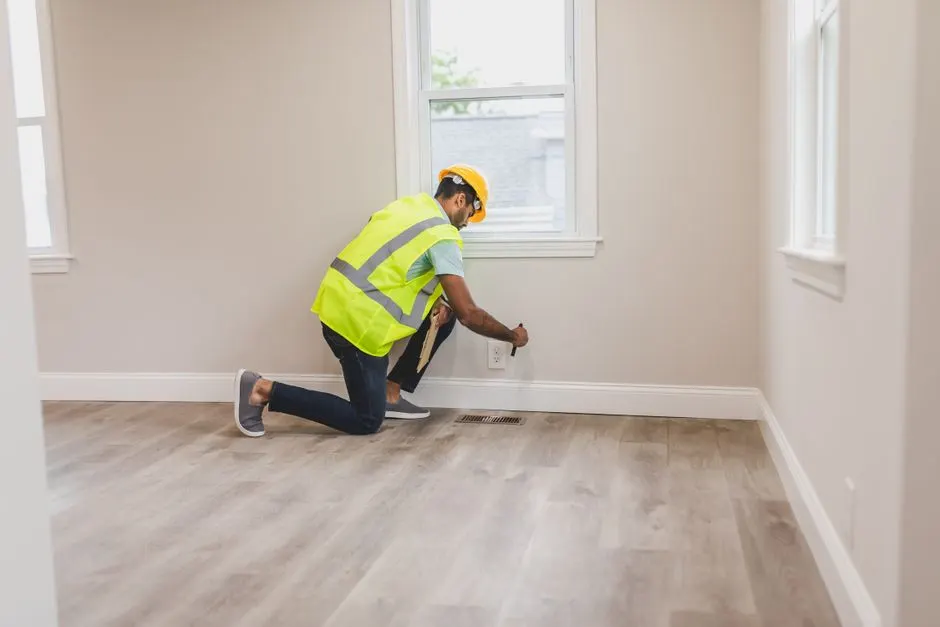
A home inspector in high visibility vest examines an electrical outlet in a modern room.
Licensed Licensed & Bonded
Fully Insured Insured & Bonded
24/7 Emergency Same-Day Response
Warranty Backed Workmanship Guaranteed in Fort Worth

What Is Included In Every Inspection

Every residential mold inspection includes the full walkthrough, moisture mapping, thermal imaging, and at least two air samples. Add-ons like ERMI, mycotoxin panels, and additional sampling are quoted upfront so you know the total before we start.

Full Attic And Crawl Space

We inspect the attic decking, rafters, insulation, and soffit vents, plus the crawl space joists, subfloor, and vapor barrier. These two areas account for the majority of Fort Worth mold calls, so they are never skipped or treated as an add-on.

Moisture Mapping

Every wall, ceiling, and floor that touches a plumbing line gets a Protimeter moisture reading. Elevated readings get a boroscope inspection behind the drywall so we can confirm growth without demolition.

Thermal Imaging Scan

A FLIR thermal imaging camera scans the whole home for temperature anomalies that reveal hidden moisture, missing insulation, or duct leaks. This is how we find slab leaks and roof leaks before they show up as visible mold.

Air Sampling

We run at least two Zefon Air-O-Cell spore trap samples, one indoors in the affected area and one outdoors for a baseline. Lab analysis comes back in 24 to 48 hours with species and spore counts.

Written Report

You get a written report with photos, moisture percentages, lab results, and a recommended scope of work. The report is formatted for realtors, insurance adjusters, and remediation crews, and we walk you through it line by line.

Phone Support After

If you have questions after the report lands, call us. We answer follow-up questions about the findings, the scope of work, or what to tell your contractor at no extra charge.

Residential Mold Inspection Fort Worth TX


A Residential Mold Inspection Fort Worth TX is a room-by-room evaluation of your home that combines moisture readings, thermal imaging, and air sampling to find mold growth and the water source feeding it. We check the attic, crawl space, HVAC closet, bathrooms, and every wall that touches a plumbing line. You get photos, moisture percentages, and lab results from an accredited lab, not a verbal guess.

Fort Worth homes deal with two mold drivers: summer humidity that pushes indoor RH past 60%, and winter condensation on cold north-facing walls. Add slab leaks in older Ryan Place and Fairmount homes, plus roof leaks after spring hail, and you have the recipe for black mold behind drywall. If you have been searching for a home mold assessment near me Fort Worth, we can usually be on-site the same day.

What To Expect During Your Inspection

Five steps, start to finish. Most homes take two to four hours on-site, and you get lab results back within 24 to 48 hours depending on the panel you choose.

01

Schedule

Call or book online — a real human picks up and confirms a 2-hour arrival window.

02

Diagnose

Licensed tech inspects on-site, then walks you through the cause and your options.

03

Fix

The job is completed to code and done right the first time — no shortcuts, no surprises.

04

Guarantee

Every job backed by a written workmanship warranty — and we stand behind it.

Tools And Methods We Use

Tools & Equipment

Protimeter Moisture Meter

Pin and pinless readings on drywall, wood framing, and subfloor to measure actual moisture content, not just surface dampness. This is the first tool out of the bag on every inspection.

FLIR Thermal Imaging Camera

Scans walls, ceilings, and floors for temperature anomalies that reveal hidden moisture, missing insulation, and duct leaks. Finds slab leaks and roof leaks before they show up as visible mold.

Zefon Air-O-Cell Cassettes

Spore trap cassettes used with an air sampling pump to capture airborne mold spores for lab analysis. We run at least one indoor and one outdoor sample on every job.

Boroscope

A flexible camera that lets us look behind drywall, inside wall cavities, and inside HVAC ductwork without demolition. Confirms growth when moisture readings are elevated but nothing is visible.

Hygrometer

Measures relative humidity and temperature. Fort Worth homes with indoor RH above 60% are prime candidates for condensation-driven mold on cool surfaces.

Air Sampling Pump

Draws a calibrated volume of air through the spore trap cassette. Calibration matters, because the lab reports spores per cubic meter based on the volume we pulled.

ERMI Dust Cloth

A single dust sample analyzed by DNA for 36 mold species. Gives you one number to compare against a national baseline, useful after remediation or before buying a home.

Methods & Standards

ANSI/IICRC S520 Assessment Protocol

The industry standard for mold assessment and remediation. We follow it on every job, from the initial walkthrough to the sampling plan to the written report. It is what makes our documentation acceptable to insurers, realtors, and remediation contractors.

Tape Lift And Swab Sampling

When we find visible growth, we take a tape lift or swab sample and send it to the lab for species identification. This tells you whether you are dealing with a common allergen like Cladosporium or something more concerning like Stachybotrys.

Moisture Mapping With Thermal Verification

We cross-check every moisture meter reading with a thermal image. If both tools agree, we have high confidence in the finding. If they disagree, we boroscope the cavity to see what is actually going on.

Indoor Versus Outdoor Air Comparison

Mold spores are always in the air. The question is whether indoor counts are elevated relative to outdoor counts. We run both samples and compare them, which is how the lab determines whether your indoor air is abnormal.

Accredited Lab Analysis

All samples go to accredited labs like EMSL Analytical, LabCorp, or Mycometrics. We do not run in-house analysis, because independent lab results carry more weight with insurers, realtors, and attorneys.

When To Book An Inspection

01

You are under contract on a Fort Worth home and the buyer's inspector flagged moisture in the attic.

What we do: We prioritize real estate deadlines and can usually be on-site within 24 hours. We run air samples, thermal-image the attic, and deliver a written report you can use to negotiate repairs or request a credit.

→ You get a clear answer before your option period ends, and the report gives you leverage in the negotiation.

02

Your HVAC has been running nonstop and the house smells musty every time it kicks on.

What we do: We inspect the air handler, evaporator coil, drain pan, and ductwork, and we sample the supply air to see whether the system is circulating mold. If the coil is contaminated, we document it and write a scope of work.

→ You know whether the HVAC needs cleaning, replacement, or just a drain-pan fix, and you have documentation for your contractor.

03

You had a slab leak repaired last year and now there is a stain on the baseboard in the same room.

What we do: We moisture-map the wall, thermal-image the slab area, and run air samples to confirm whether mold is active. If growth is present, we write a remediation protocol your contractor can follow.

→ You catch the problem before it spreads to the adjacent room, and you have a written scope of work to hand to a remediation crew.

04

You just finished a remediation and want to confirm the job was done right.

What we do: We run post-remediation clearance testing with air samples and, if needed, ERMI dust cloths. We compare indoor counts to outdoor baselines and issue a clearance letter if the numbers pass.

→ You get a written clearance letter you can hand to your insurance company or a future buyer.

How Residential Mold Inspection Runs In Fort Worth

Fort Worth sits in a climate zone that swings hard between humid summers and dry, cold winters, and both seasons drive mold calls. In summer, indoor RH climbs past 60% and condensation forms on AC registers and exterior walls. In winter, cold north-facing walls collect condensation while the heater runs. Add the older housing stock in Fairmount, Ryan Place, and Mistletoe Heights, where slab leaks and pier-and-beam crawl spaces are common, and you have a city where mold problems look different block to block. We adjust our inspection plan based on the age of the home, the foundation type, and the neighborhood. If you are searching for an affordable home mold assessment Fort Worth TX, we quote flat before we start, and we tell you on the phone whether you need a full inspection or just a targeted moisture check.

Neighborhoods We Serve

  • Fairmount

    1920s bungalows with pier-and-beam foundations and original plumbing. Slab leaks and crawl space moisture drive most of our calls here.

  • Ryan Place

    Historic homes with mature trees and older roofs. Roof leaks after spring hail are the most common source of attic mold we find.

  • West 7th

    Newer construction and condos with tight building envelopes. Poor ventilation traps humidity, and HVAC mold shows up in units that run AC year-round.

  • Wedgwood

    Mid-century homes with original ductwork. HVAC mold and condensation on supply registers are frequent findings in this neighborhood.

  • Eastchase

    Newer builds with slab foundations. We see moisture intrusion at window flashing and around hose bibs more often than crawl space issues.

Local Conditions We Plan For

  • Summer humidity above 60% indoor RH

    Feeds condensation-driven mold on cool surfaces like AC registers, exterior walls, and closet corners. We measure RH on every inspection and recommend dehumidification when it is high.

  • Spring hail and roof leaks

    Hail damages flashing and shingles, and water finds its way into the attic. Attic mold can start within 48 hours, which is why we prioritize post-storm calls.

  • Slab leaks in older homes

    Slow slab leaks wick up through the foundation and into baseboards and drywall. We thermal-image the slab area and moisture-map the walls above it to trace the path.

  • Pier-and-beam crawl spaces

    Ground moisture rises into the subfloor and joists. We check vapor barriers and recommend encapsulation when humidity in the crawl space is consistently high.

Slab Leak In A Fairmount Bungalow

Before

A homeowner in Fairmount noticed a musty smell in the back bedroom and a stain on the baseboard. Two other companies quoted full remediation without testing. We ran air samples, thermal-imaged the slab, and traced the moisture to a slow slab leak under the foundation.

After

The plumber repaired the slab leak, we re-ran air samples 10 days later, and indoor spore counts dropped from 1,400 spores per cubic meter to 180, matching the outdoor baseline. No remediation was needed.

Maintenance: We recommended a quarterly moisture check on the affected wall for the first year and a dehumidifier set to 50% RH during summer months.

Before

A Wedgwood homeowner called after a spring hail storm. The attic smelled musty and there was dark staining on two rafters. We thermal-imaged the roof deck, found the leak path around a damaged flashing, and confirmed black mold on the rafter surfaces with tape lift sampling.

After

The roofer replaced the flashing, the remediation crew removed and replaced the two affected rafters, and post-remediation clearance testing came back clean. The whole job was covered by insurance using our documentation.

Maintenance: We recommended an annual attic inspection each spring after storm season and a moisture check on the roof deck after any future hail event.

Before

A West 7th condo owner had a musty smell every time the AC kicked on. We inspected the air handler, found a clogged drain pan and biological growth on the evaporator coil, and confirmed with supply-air sampling that the system was circulating elevated spore counts.

After

The HVAC contractor cleaned the coil and pan, replaced the filter with a HEPA unit, and we re-sampled the supply air. Indoor counts dropped from 2,100 to 220 spores per cubic meter, and the musty smell was gone.

Maintenance: We recommended a monthly filter change, an annual coil cleaning, and a quarterly drain-pan flush to keep the system dry.

Problems We Solve For Fort Worth Homeowners

Most of our calls come down to one of these five problems. If any of them sound familiar, an inspection is the fastest way to get a real answer instead of a guess.

Problem

Musty smell with no visible mold

Musty air usually means active growth somewhere you cannot see, often behind drywall or inside the HVAC system. Ignoring it lets the colony spread and turns a small fix into a full remediation.

Our Fix

We run air sampling and thermal imaging to locate the source, then confirm with a boroscope inspection behind the wall. Fort Worth homes with musty bedrooms almost always trace it to a slow plumbing leak or a clogged HVAC drain pan.

Problem

Ceiling or wall stain after a storm

A water stain is a leak path, and mold can start growing within 24 to 48 hours of the water arriving. Waiting for it to dry on its own usually means the mold is already established behind the paint.

Our Fix

We moisture-map the affected area, thermal-image the ceiling to trace the leak path, and sample the air to confirm whether growth is active. You get a report your roofer and insurance adjuster can both use.

Problem

High indoor humidity in summer

Fort Worth summers push indoor RH past 60%, which is enough to feed mold on cool surfaces like AC registers, exterior walls, and closet corners. Left alone, it becomes a recurring problem every year.

Our Fix

We measure humidity with a hygrometer, identify the drivers, and recommend dehumidifiers, ventilation upgrades, or HVAC adjustments. If growth is already present, we sample it and write a scope of work.

Problem

Buying a home with a mold history

A seller's disclosure that mentions past mold is not enough to know whether the problem was fixed correctly. Buying without verification can mean inheriting a remediation bill you did not budget for.

Our Fix

We run a full residential mold inspection with air sampling and, if you want species-level detail, an ERMI dust cloth. You get a written report you can use to negotiate price, request repairs, or walk away.

Problem

Symptoms that get worse at home

Headaches, sinus issues, and fatigue that improve when you are away from home often point to indoor air quality problems. Standard air sampling sometimes comes back inconclusive, leaving you without answers.

Our Fix

We combine air sampling with ERMI dust cloths and, when needed, mycotoxin test kits to look for toxins, not just spores. Fort Worth customers use this when they need documentation for a doctor or a landlord.

Why Fort Worth Homeowners Book Us

Why Fort Worth Homeowners Book Us

A mold problem you can't see is still a mold problem. These are the outcomes our Fort Worth customers care about most, and what we deliver on every inspection.

  • Lab-Backed Answers

    Every air sample goes to an accredited lab like EMSL Analytical or LabCorp, and you get a written report with spore counts, species, and photos. No guessing, no scare tactics. If the lab says the air is clean, we tell you that and you keep your money.

  • Same-Day Availability

    We run same-day residential mold inspection Fort Worth Texas appointments for active leaks, post-storm calls, and real estate deadlines. Call before noon and there is a good chance we are at your door by late afternoon with a moisture meter and thermal camera in hand.

  • Find The Water Source

    Mold does not grow without moisture. We use a Protimeter moisture meter, a FLIR thermal imaging camera, and a boroscope to trace the source, whether it is a slab leak, a roof flashing, a slow supply-line drip, or condensation on an HVAC duct in the attic.

  • Report You Can Use

    Your report includes room-by-room findings, moisture percentages, lab results, and a clear scope of work if remediation is needed. Realtors, insurance adjusters, and remediation crews all accept our documentation without a back-and-forth.

Local Experience You Can Verify

Our inspectors are trained to the IICRC and ANSI/IICRC S520 standard for mold assessment and remediation, and we work to ACAC and CIEC guidelines on every job. We have inspected homes across Tarrant County, from 1920s bungalows in Fairmount to new builds in Eastchase. We carry Texas Department of Licensing and Regulation (TDLR) credentials where required, EPA and OSHA safety training, and we use accredited labs like EMSL Analytical and Mycometrics so your results stand up to a real estate negotiation or an insurance claim.

  • IICRC-trained inspectors working to the ANSI/IICRC S520 standard on every job
  • ACAC and CIEC-aligned assessment protocols for residential properties
  • Accredited lab partners: EMSL Analytical, LabCorp, Mycometrics
  • Thermal imaging and moisture mapping on every inspection, no upcharge
  • Written reports accepted by Fort Worth realtors, adjusters, and remediation crews
Get Started Today
Local Experience You Can Verify

Frequently Asked Questions

Real answers to the questions we hear most often from local homeowners and property managers.

How much does Residential Mold Inspection cost in Fort Worth TX?
Most residential inspections in Fort Worth run $350 to $850 in 2026, depending on square footage, how many samples you want, and whether you add ERMI or mycotoxin testing. A basic inspection with two air samples starts around $350. A full package with moisture mapping, thermal imaging, and five samples lands closer to $850. We quote flat before we start.
What does a home mold assessment include in Fort Worth?
A home mold assessment in Fort Worth includes a full walkthrough of the attic, crawl space, HVAC closet, bathrooms, and every wall that touches plumbing, plus moisture readings with a Protimeter meter, thermal imaging with a FLIR camera, and air sampling with Zefon Air-O-Cell cassettes. You get a written report with photos, lab results, and a recommended scope of work.
Who is the best residential mold inspection company in Fort Worth Texas?
The best residential mold inspection company in Fort Worth Texas is one that does not also sell remediation, because that removes the incentive to inflate findings. Look for IICRC training, ANSI/IICRC S520 protocols, accredited lab partners like EMSL Analytical, and a written report you can hand to a realtor or adjuster. We meet all four, and we will tell you when your home is clean.
Does Residential Mold Inspection include attic and crawl space in Fort Worth?
Yes. Every residential mold inspection we run in Fort Worth includes the attic and crawl space, because that is where most Fort Worth mold problems start. Attic mold usually traces to a roof leak or bath fan venting into the attic. Crawl space mold comes from ground moisture and poor ventilation. We check both on every job, no add-on fee.

Related Services

Mold Inspection

Our general mold inspection covers the same walkthrough and sampling protocol as a residential inspection, scaled for any property type. Fort Worth homeowners often start here when they are not sure whether the issue is mold, mildew, or just a musty smell from a slow drain.

View Mold Inspection

Mold Testing

Mold testing is the lab side of the inspection. We collect air, tape lift, or swab samples and send them to EMSL Analytical or LabCorp for species-level identification. Fort Worth customers use this when they need proof for a landlord, an insurance claim, or a real estate negotiation.

View Mold Testing

Air Quality Testing

Air quality testing measures spore counts indoors versus outdoors to see whether your HVAC is circulating mold. Fort Worth homes with older ductwork and high summer humidity often show elevated indoor counts even when no visible growth is present.

View Air Quality Testing

Moisture Mapping and Detection

Moisture mapping uses a Protimeter meter and thermal imaging to trace water behind walls, under floors, and inside ceilings. It is the step that finds the source feeding the mold, which is what actually solves the problem for Fort Worth homeowners.

View Moisture Mapping and Detection

Thermal Imaging Inspection

We use a FLIR thermal imaging camera to spot temperature differences that reveal hidden moisture, missing insulation, or duct leaks. In Fort Worth, this is how we find slab leaks and roof leaks before they turn into visible black mold.

View Thermal Imaging Inspection

Mold Remediation Protocol

If remediation is needed, we write the protocol: containment, HEPA filtration, antimicrobial coatings, and clearance criteria. Fort Worth remediation crews work from our scope, and we come back to verify the job was done right.

View Mold Remediation Protocol

Book Your Residential Mold Inspection Fort Worth TX Today

Call +1 (866) 896-8166 and we will tell you on the phone whether you need an inspection today or can wait until next week. Same-day slots are available, and you get a flat quote before we start. Licensed, insured, and independent of any remediation company.

Call Now Book Inspection

Contact Fort Worth Mold Testing

Call (866) 896-8166 or email info@fortworthmoldtesting.com and we will get you on the schedule. We answer calls Monday through Friday from 8am to 6pm and run emergency response for water damage and post-storm inspections. Most standard inspections are booked within a day or two.

Or call us right now at +18668968166 — we answer.

Fort Worth Mold Testing


  • Phone

    +18668968166
  • Address

    Fort Worth, Texas

  • Hours

    Mon–Fri: 7AM – 7PM
    Sat: 8AM – 4PM
    Sun: Emergency Only
    24/7 Emergency Available

Call +18668968166 Get Quote
Call Quote